Listen to the AI-generated audio version of this article. (Beta)
A biologically grounded protocol for better sleep
This protocol is based on the body’s strongest regulatory systems: light, movement, temperature, neurochemistry, and the nervous system. Sleep does not begin in the evening. It is built across the entire day.
1. Start the day correctly
Use daylight
Within the first 60 minutes after waking, go outside for 10–20 minutes. Natural daylight is the most powerful regulator of your internal clock and determines when your body will become sleepy in the evening.
Keep a fixed wake-up time
Get up at the same time every day, including weekends and after short nights. Wake-up time is the most important anchor of the circadian system.
Early movement and activation
Light physical activity in the morning strengthens the “daytime signal” to the brain and reduces morning sleepiness.
2. Regulate the day
Daily physical activity
Move every day. Physical activity increases natural sleep pressure, deepens slow-wave sleep, and lowers stress hormones. Endurance training, strength training, and everyday movement all support sleep. Evening exercise is well tolerated by many people and can even improve sleep. Individual response is decisive.
End caffeine and stimulants early
Stop coffee, black and green tea at least 9–10 hours before bedtime. Energy drinks and nicotine also impair sleep.
Limit daytime naps
If you nap, keep it under 20 minutes and not later than 3 p.m. Long or late naps reduce biological sleep pressure.
Keep regular meal times
Strongly irregular eating patterns shift internal rhythms. Consistent meal timing supports the sleep–wake cycle.
3. Prepare the evening biologically
Reduce mental activation
In the evening, scale back demanding conversations, work, news, and emotionally intense content. The brain needs a transition from performance mode to recovery mode.
Food and alcohol
Eat your last substantial meal about three hours before bedtime. Avoid alcohol. It fragments sleep and suppresses REM phases.
Dim the light
Reduce light exposure 60 minutes before bed. End screen use so melatonin production can begin.
Use temperature strategically
A warm shower or bath about 60 minutes before sleep helps lower core body temperature afterward, which facilitates falling asleep.
Establish rituals
Repeated, calm routines signal the nervous system that the day is ending.
4. Shape the night properly
Optimize the sleep environment
The bedroom should be quiet, cool (about 17–19 °C / 63–66 °F), and as dark as possible.
Bed = sleep
Use the bed only for sleep and intimacy. No work, no eating, no scrolling.
Unload the mind
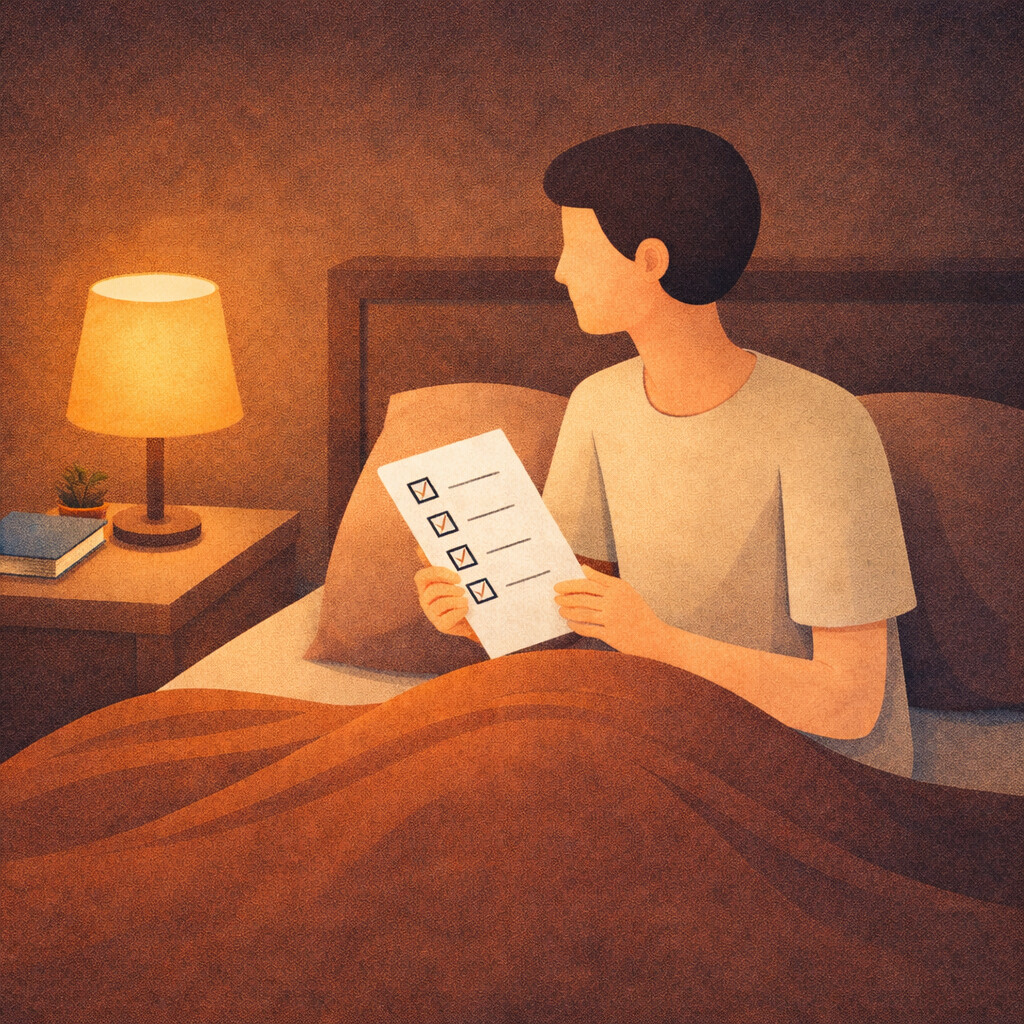
If you ruminate, briefly write down tasks or worries. This reduces cognitive load.
Do not lie awake
If you are not asleep after about 20 minutes, get up. Do something low-stimulation in dim light. Return only when real sleepiness appears.
Handle bad nights correctly
Keep your fixed wake-up time. Do not compensate by sleeping in. This stabilizes your rhythm and prevents chronic sleep problems.
The 10-3-2-1-0 rule
10 hours before bed: no caffeine or stimulants
3 hours before bed: no food and no alcohol
2 hours before bed: no work and no mentally demanding tasks
1 hour before bed: no screens, dim lights, begin wind-down
0: no snoozing in the morning, get up immediately