Listen to the AI-generated audio version of this article. (Beta)
This exercise is not meant to calm you down.
It is meant to help your nervous system learn something new.
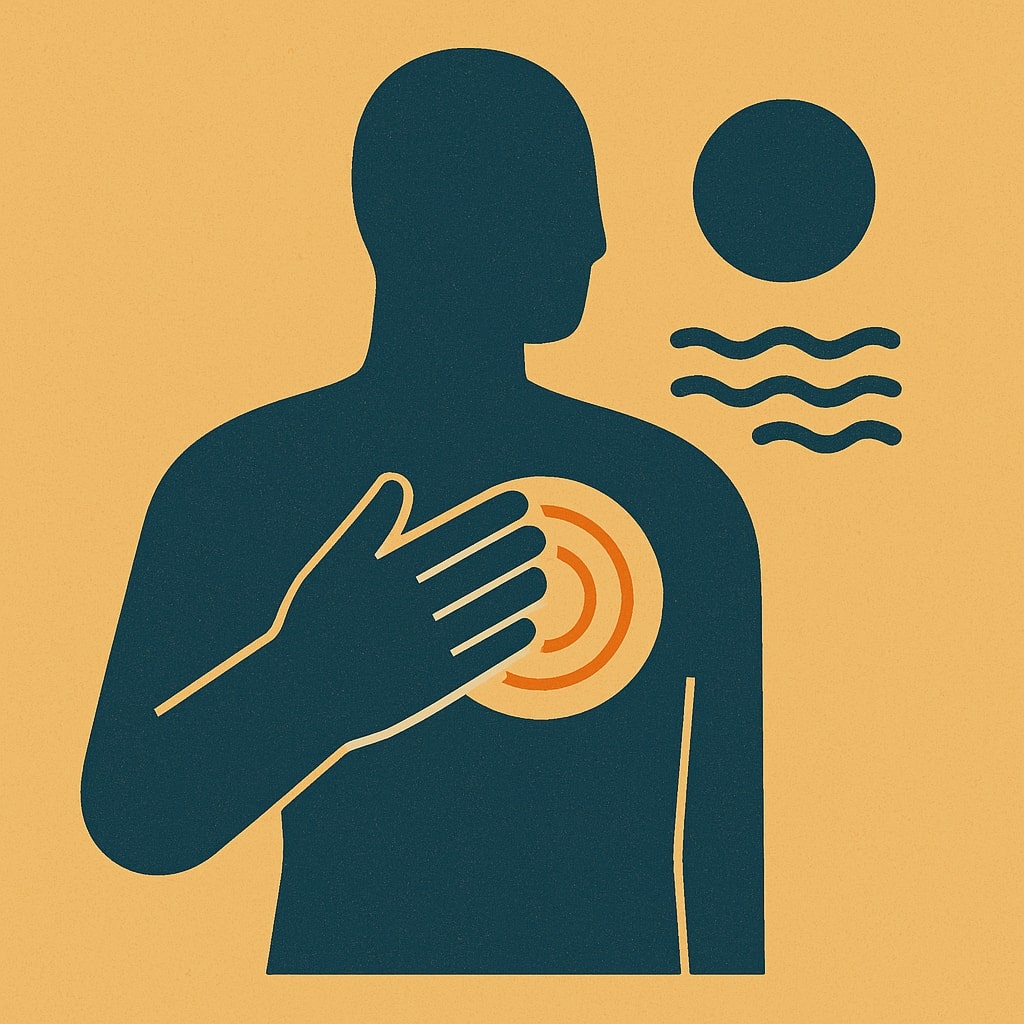
Choose a moment in everyday life when mild physical activation is present or likely to occur. This might be a slightly faster heartbeat, restlessness, warmth, tension, or a sense of alertness. Do not wait for strong anxiety. Subtle is enough.
When you notice a bodily sensation, pause for a moment.
Do not try to change it.
Do not regulate your breathing.
Do not distract yourself.
Instead, gently shift from doing something about the sensation to staying with it.
Silently name what is happening in neutral terms.
For example:
“My heart is beating faster.”
“There is tension in my chest.”
“My body is activated.”
Then add one sentence that changes the meaning, not the sensation:
“This is activation, not danger.”
“This is uncomfortable, not harmful.”
“This can rise and fall on its own.”
Now stay.
Not rigidly. Not forcefully.
Just present.
Notice whether the sensation changes over time. It may increase, decrease, move, or fade. There is no goal. The only task is to remain without intervening.
If you catch yourself checking, controlling, or mentally negotiating, simply notice that too. Then return to staying.
End the exercise not when the sensation disappears, but when you realize:
“I didn’t have to do anything.”
This is the learning moment.
Practiced regularly in small doses, this experience teaches the nervous system what insight alone cannot: that bodily activation is tolerable, temporary, and not dangerous.
A quiet reminder
If anxiety feels overwhelming or if panic repeatedly limits your daily life, this learning process may be easier with professional support. You do not have to do it alone.